
A detailed explanation of the principles of glass production and the glass recycling process
- Silica or Sand (SiO2): The principal network-forming component (acidic oxide) of glass.
- Soda Ash or Sodium Carbonate (Na2CO3): Acts as a flux; it significantly lowers the high melting point of silica from ~1700°C down to approximately 1200°C – 1500°C.
- Limestone or Calcium Carbonate (CaCO3): Imparts chemical durability, insolubility in water, and mechanical stability to the glass.
- Cullet: Crushed pieces of broken or recycled glass; its addition accelerates the melting rate of the batch and substantially saves thermal energy.
- Coloring Agents / Pigments: Added to produce distinct coloration—ferric salts for yellow, ferrous or chromium salts for green, and manganese dioxide (MnO2) for purple/violet.
When silica (SiO2) is heated with soda ash (Na2CO3), sodium silicate (Na2SiO3) is produced:
Upon cooling, sodium silicate (Na2SiO3) solidifies into a glass-like mass. It is commonly known as Water Glass (readily soluble in water).
On the other hand, when silica (SiO2) is heated with limestone (CaCO3), calcium silicate (CaSiO3) is formed:
However, when silica (SiO2) is fused at high temperatures with a mixed batch of soda ash (Na2CO3) and limestone (CaCO3), Sodium Calcium Silicate is formed. Upon controlled cooling, it forms a homogeneous, vitreous mass that is completely insoluble in water and ordinary acids (ordinary soda-lime glass):
A stoichiometric proportion of the batch raw materials—soda ash (Na2CO3), limestone (CaCO3), dolomite [CaMg(CO3)2], feldspar, and sand (SiO2)—is accurately weighed and heated in a furnace at 1400°C for 10 to 12 hours to form molten glass, known as Glass Metal. Specific coloring agents are added as needed (ferric salts for yellow, ferrous/chromium salts for green, and manganese dioxide for violet). Fining agents such as Al2O3, NaNO3, and NH4Cl are incorporated to eliminate trapped gas bubbles (e.g., SO2 or CO2) and ensure clarity.
The viscous molten glass metal is fabricated into various desired commercial forms and articles by blowing, pressing, rolling, or casting, either manually or via automated machinery.
Newly shaped glass articles must undergo annealing to relieve internal mechanical stresses and make them thermal- and impact-resistant. If not annealed, uneven cooling creates severe internal strain, causing the glass to shatter upon slight temperature variations or mechanical shocks. Every glass composition has a critical annealing temperature below its softening point. The shaped glass is heated just above this critical temperature, maintained for an appropriate period, and then cooled very slowly and uniformly. This process ensures structural uniformity, yielding durable, heat-resistant, and tough glassware.
Finally, the manufactured glass products are thoroughly washed with clean water, graded, ground, polished, edge-cut, and glazed before being safely packaged for storage and commercial distribution.
Answer: Recycling is an eco-friendly waste management process through which discarded or post-consumer waste materials are collected and converted into new, usable products by mechanical and chemical treatments rather than being thrown away. It represents one of the core principles of the universally recognized ‘3R’ strategy (Reduce, Reuse, Recycle).
Used, discarded, or broken glass bottles and jars from households, hotels, commercial entities, and industrial plants are gathered in designated recycling bins and subsequently transported to dedicated processing facilities.
The collected glass items are separated into three primary color groups: clear (Flint), green (Green), and brown (Amber). Because glasses of different colors contain distinct metallic oxide compositions, keeping them unmixed and melting them separately is essential.
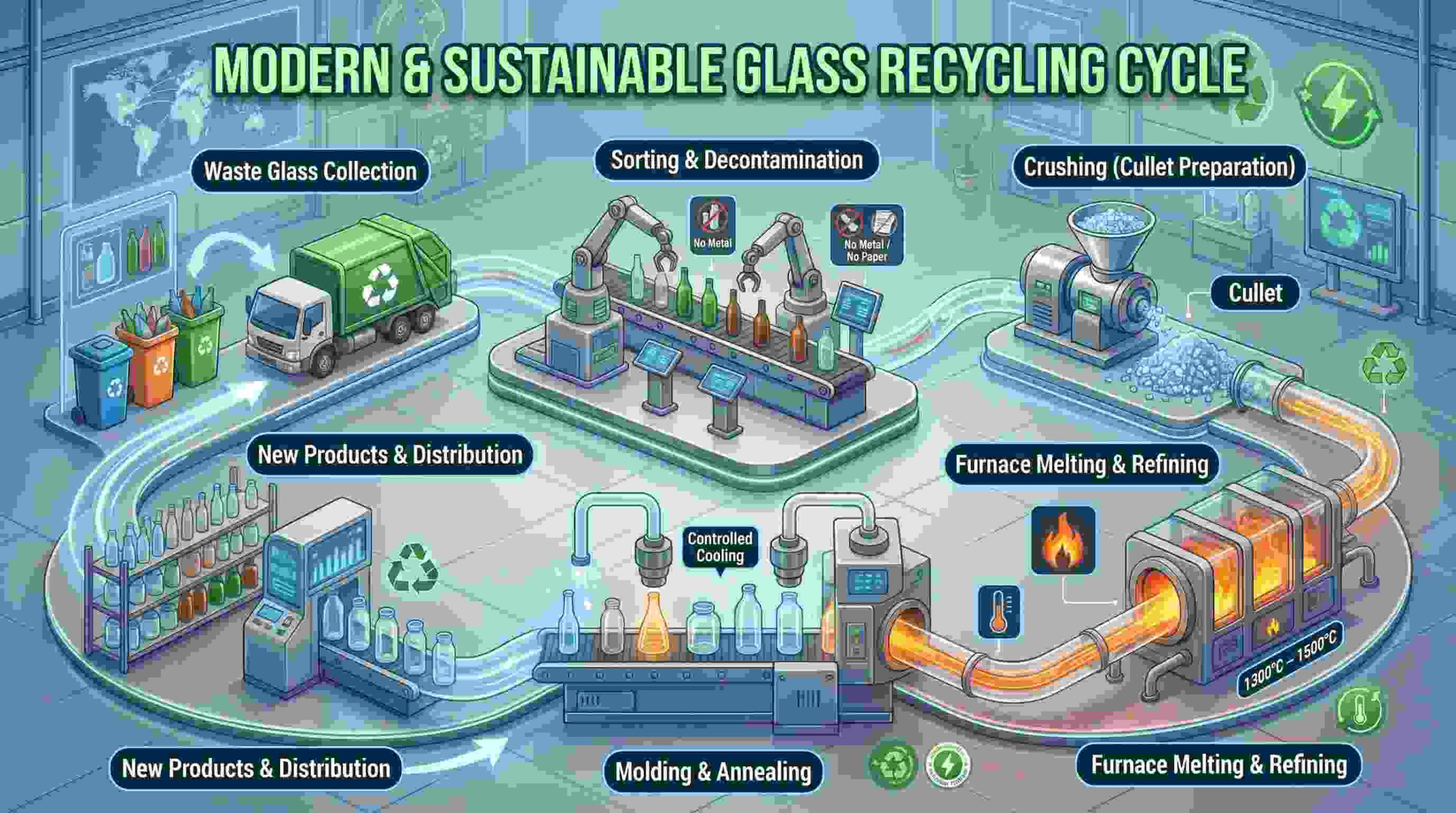 Figure 1: Waste Glass Collection and Color Sorting (Flint, Green, and Amber)
The sorted glass is fed into mechanical crushers and pulverized into small, uniform granules. These processed, granular fragments of recycled glass are technically called Cullet.
Surface dust, chemical residues, and adhesive paper labels adhering to the cullet are thoroughly washed away. Magnetic separators extract ferrous metallic caps, while air classifiers and optical sensors systematically eliminate foreign impurities such as ceramics, plastics, and paper.
The purified cullet is blended in predetermined proportions with virgin raw materials (sand, soda ash, and limestone) if needed, and heated in a glass furnace at approximately 1300°C – 1500°C. Cullet melts much faster and at lower temperatures than raw silica, resulting in substantial savings in fuel and thermal energy.
The molten glass is placed into designated molds and shaped into new bottles, jars, or containers using blowing or pressing techniques. The newly shaped glass is then cooled slowly and under strict temperature control in an annealing lehr (Lehr) furnace (Annealing) to relieve internal mechanical stresses (Internal Stress) and prevent spontaneous fracturing or brittleness.
The finished glass containers are thoroughly inspected via automated quality control systems for cracks, wall thickness variations, or trapped air bubbles before being safely packaged and shipped to the market for consumer use.
