
Rutherford’s explanation of the α-particle scattering experiment
Atomic Models
Shortly after John Dalton proposed his atomic theory, scientists became highly curious about the internal structure of the atom. Consequently, from 1897 to 1932 AD, various scientists conducted extensive experiments and research. Based on their obtained data, they presented their respective theories regarding the structure of the atom, which are widely known as Atomic Models.
The most notable atomic models are:
- Thomson’s Plum Pudding Model: Published in 1898 AD.
- Rutherford’s Atomic Model: Published in 1911 AD.
- Bohr’s Atomic Model: Published in 1913 AD.
- Bohr-Sommerfeld Atomic Model: Published in 1916 AD.
- Wave Mechanical Atomic Model: Published by Louis de Broglie in 1924 AD.
Discovery of the Atomic Nucleus
In 1911, under the guidance of physicist Ernest Rutherford, his students Hans Geiger and Ernest Marsden conducted the famous α-particle scattering experiment, which provided crucial insights into the internal structure of the atom.
In this specialized method, they bombarded a stream of approximately 20,000 high-speed α-particles onto an extremely thin gold foil (0.004 cm thick). They observed that the vast majority of the α-particles passed straight through the foil and struck a circular Zinc Sulfide (ZnS) screen placed behind it, causing it to glow.
Rutherford’s α-Particle Scattering Experiment
During the experiment, these highly energetic, fast-moving α-particles were directed toward a thin gold foil. This gold foil was positioned precisely at the center of a circular screen coated with a layer of Zinc Sulfide (ZnS).
 Figure 1: Experimental Setup
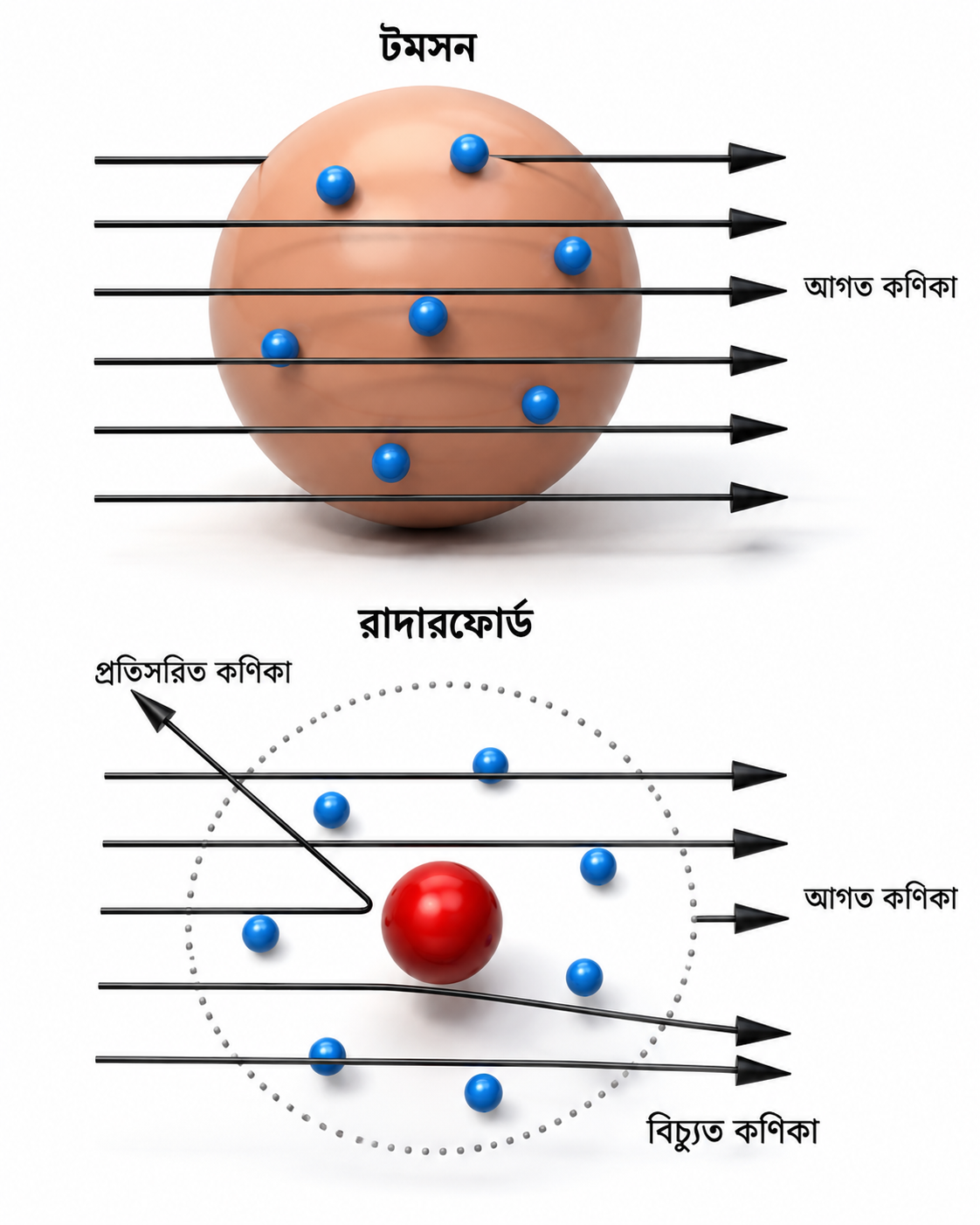 Figure 2: Deflection of Particles through Atom
Observations
- About 99% of the α-particles pass straight through the thin gold foil without changing their direction, producing bright flashes of light (fluorescence) on the ZnS screen.
- A very small fraction of the α-particles are deflected from their original paths at various angles.
- Out of approximately 20,000 particles, only 1 α-particle rebounds completely and returns in the exact opposite direction (deflected by 180°).
Conclusions / Inferences
- Most of the space inside an atom is empty. Extremely light electrons reside within this empty space. Due to their negligible mass, they cannot cause any change in the trajectory of the heavy, fast-moving α-particles.
- The complete rebound of a few α-particles indicates that they underwent a direct collision or strong repulsion with something extremely heavy and dense at the center. This implies that almost the entire mass of the atom is concentrated within a tiny central region.
- Since α-particles are positively charged (He2+) and some are deflected, it can be concluded that the heavy central core also carries a positive charge, which exerts a strong electrostatic repulsive force on the α-particles. This heavy and positively charged center is called the Nucleus. The amount of positive charge in the nucleus is exactly equal to the atomic number of that element.
- Since the overwhelming majority of α-particles pass undeflected through the gold foil, the volume occupied by the nucleus must be incredibly small compared to the total volume of the atom. In fact, the overall size of an atom is about 10,000 to 100,000 times larger than the size of its nucleus.
